
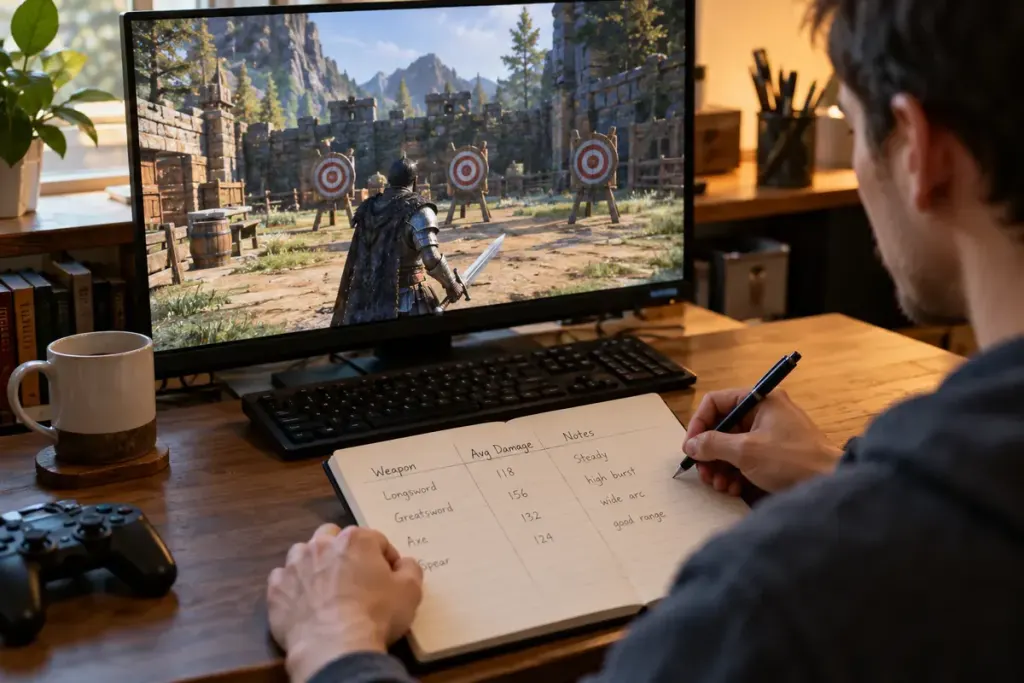
A new weapon produces one spectacular hit and immediately feels better. Before rebuilding your character around it, check whether the weapon caused the difference or whether several other variables changed at the same time.
Use a game’s legitimate training area or another repeatable encounter where available. Avoid exploits or modifications that break the game’s rules. The aim is a useful comparison within ordinary play.
Keep the test conditions recognisable
Record the game version, weapon upgrade level, character stats, relevant buffs and target. Compare similar attack sequences at similar range. If one weapon has different requirements or changes your available equipment, note that rather than pretending the two setups are identical.
Repeat the sequence enough times to notice variation. Separate ordinary hits from critical hits or temporary bonuses. A single unusually large number is poor evidence of typical performance, especially when the game includes random effects.
Measure the job you need done
Damage per hit is only one consideration. Recovery time, reach, resource use, accuracy and the ability to keep attacking can matter in the encounter you actually play. A weapon that performs well against a stationary target may be awkward when the enemy moves.
For an invented comparison, weapon A might finish a controlled sequence faster while weapon B leaves more resources for defence. Neither observation proves a universal winner. It suggests which trade-off to test in your intended activity.
Change one major variable at a time and keep a short record of the result. If a patch changes the weapon or combat system, date the old notes rather than continuing to present them as current.
Finally, include comfort and consistency. If you repeatedly miss an attack that looks excellent on paper, practise it or choose the option you can use reliably. A test should inform your play style, not force you to prefer the largest isolated number.