
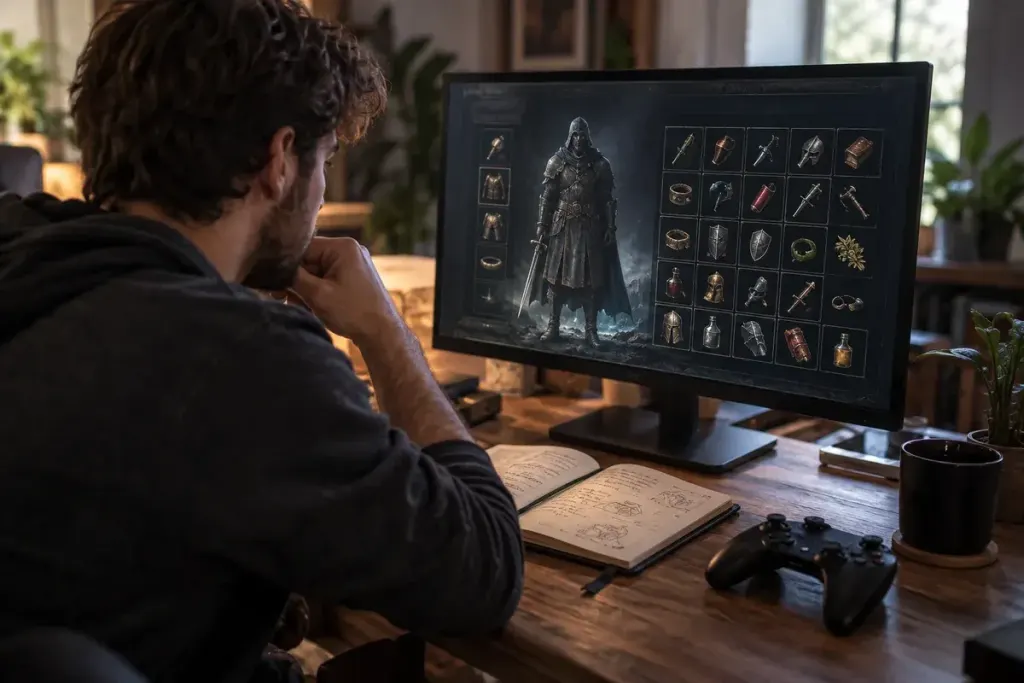
You return from a successful encounter and spend the next twenty minutes comparing almost identical items. The bag is full, the quest continues somewhere else and every object feels too rare to part with.
Inventory management is easier when decisions have a purpose. The goal is not a perfectly empty bag. It is enough room and clarity to support the way you want to play.
Learn what the game protects
Identify how the particular game marks quest items, equipment, crafting materials and ordinary valuables. Do not assume a rule from another title applies. Some objects cannot be sold; others look important but have no later use.
Bethesda’s support entry on locating quest items illustrates why title-specific help is useful. Read the relevant game’s documentation and item descriptions before making irreversible decisions, especially if you want to avoid story spoilers.
Choose a few rules that match your build
Keep equipment you use, a limited set of alternatives with a clear role and materials connected to realistic near-term plans. “I might need this someday” can apply to every object and therefore resolves nothing.
For a fictional example, a player might retain one resistance-focused armour option for a known area while selling repeated copies of a weaker item. That is a decision rule, not advice about any particular game’s balance or future quest requirements.
Give consumables a job
If every potion is saved for a harder fight, none helps with the fights you are actually attempting. Decide which ordinary encounters justify using common resources, taking account of how easily the game replenishes them.
Keep truly uncertain items in a clearly separated stash if the game allows it. Revisit that small group after learning more instead of letting uncertainty spread across the entire inventory.
Stop sorting at a useful point
Use built-in filters, favourites or comparison tools where available. Set a modest end condition, such as enough capacity for the next outing and an equipped loadout you understand. You do not need to optimise every item before returning to the part of the game you enjoy.
Review the rules when your build or goals change. A useful inventory serves the next session; it should not become a second game you never intended to spend the evening playing.